

First published in Deccan Herald, 25 Aug 2026
A man comes home tired from work to find his wife gossiping with the neighbour. The man beats his wife. When Sanjana, Senior Program Manager, Enfold Proactive Health Trust, Bengaluru, presented this scenario to a group of children in Rajasthan, all the boys in a class, aged 8 or 9 years, felt that the man was justified in beating his wife. That women need to be kept in their place is a cultural trope that seeps into children in their formative years. If you thought this macho and sexist attitude is limited to children from rural or lower socioeconomic backgrounds, think again. A significant number of boys attending elite private schools idolize Andrew Tate, who promotes toxic masculinity and misogyny.
A holistic & ongoing approach
Though girls may do better on Board exams, gender inequities are rife in Indian classrooms. Fortunately, some NGOs and schools have taken a proactive approach to tackle these biases head on. Shirish Darak, Director, Prayas Health Group, Pune, has created a Comprehensive Sexuality Program for students from Grades 1 to 10 that helps children identify and challenge gender stereotypes in developmentally suitable ways. The program covers a gamut of topics around gender, identity and sexuality.
Both Shirish and Sanjana aver that one-time workshops are of limited value. For concepts to percolate and affect change, discussions around puberty, relationships, body image, bullying, abuse, consent and safety have to be revisited on an ongoing basis, tailored to children’s lived experiences and morphing maturational needs.
Initial impact
Fortunately, some schools have realized the need for sexuality education that also addresses gender sensitization and have embraced programs offered by Prayas and Enfold. For example, Kalyani Firodia, the Founder-Director of Urja Gurukul, Ahmednagar, noticed that girls in high-school were reticent in class though they used to speak up in earlier grades. When the girls were questioned about this, they confessed to being teased and bullied by boys when teachers were not around.
However, after Prayas’ Comprehensive Sexuality Curriculum was introduced, Kalyani has noticed a palpable change in the behaviour of both girls and boys. While the girls began to voice their opinions in class, boys also grew more respectful and understood the concept of respecting boundaries.
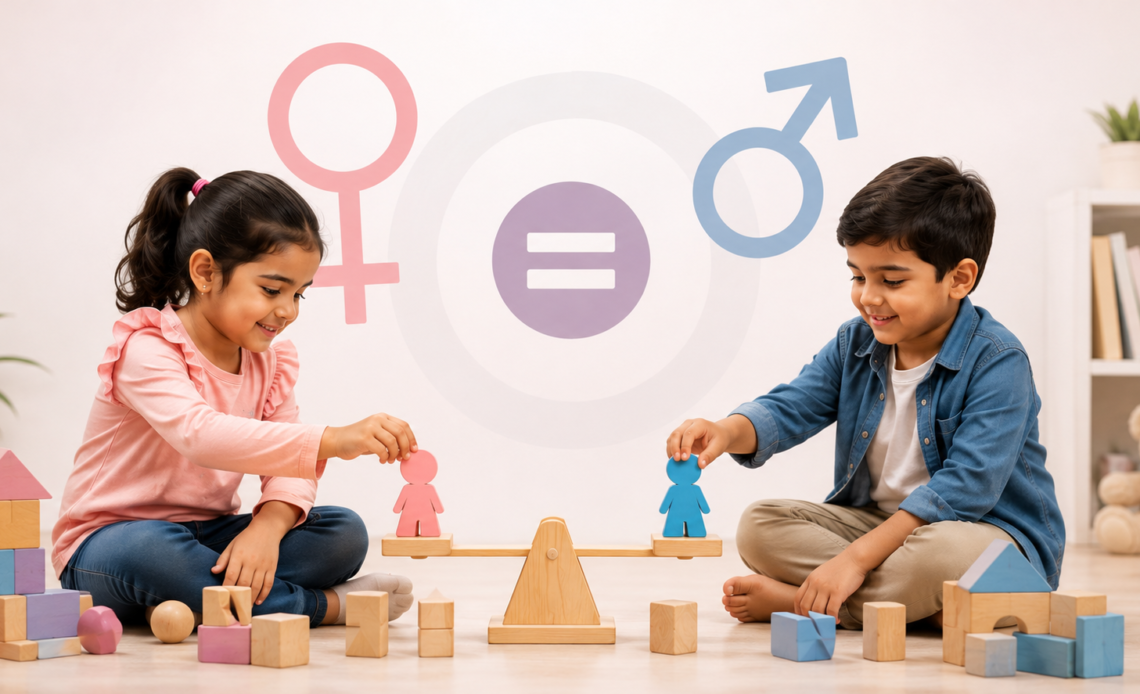
Conversations that deconstruct masculinity and femininity are empowering for both boys and girls. Whether it’s girls wanting to play football or boys wanting to sew, these programs can be eye-opening for children who inhabit a society that perpetuates gender stereotypes and hierarchies. “Patriarchy is also dehumanizing for men,” says Sanjana referring to social norms that shame boys for crying or displaying vulnerabilities. Likewise, the notion that men have to be the sole or the main providers puts pressure on males while limiting opportunities for females.
Madhura Rajvanshi, a teacher & coordinator at Pragat Shikshan Sanstha, Phaltan says that teachers at her school are delivering Prayas’ curriculum after getting trained by the NGO. She finds that the program has been beneficial not only for students but also for teachers who are now less inhibited in discussing topics that were earlier considered taboo. Besides normalizing conversations around gender and sexuality, Madhura also finds that students are more aware and empathetic to all forms of difference. Unlike earlier, where sex education was limited to prevention and was couched in a language of fear, current sexuality programs are more holistic and empowering. Whether it’s a discussion on body parts, menstruation or intersex individuals, students are engaged, curious and confident.
According to Ipsita Chakrabarti , Director, The Montessori Academy, Pune, sexuality education has to be comprehensive, flexible and responsive to situational needs as and when they arise. She feels that Prayas’ program is rounded as it addresses physical and psychological facets while factoring in children’s local contexts. She emphasizes the need for creating an ecosystem that allows for honest, direct and open conversations on any topic that concerns children and their developing selves.
Pushback from parents
While the programs of Prayas and Enfold are impactful, one stumbling block is parental resistance. Initially, some parents assume that a program that discusses sexuality will encourage precocious sexual experimentation. However, once parents realize that these programs promote agency and understanding, their resistance abates. Further, with children being exposed to dangerous and inappropriate online content, Shirish says that it is essential to help them “critically engage with information.” Sanjana adds that children with disabilities require customized programs that her organization provides.
It’s heartening that some schools and NGOs are rewriting the script around gender sensitization and sex education. As opposed to a culture of shame and silence, at least some schools are trying to create safe and secure spaces for children to understand themselves in their entirety.
(The author is a psychologist, writer & Visiting Faculty, Azim Premji University.)